
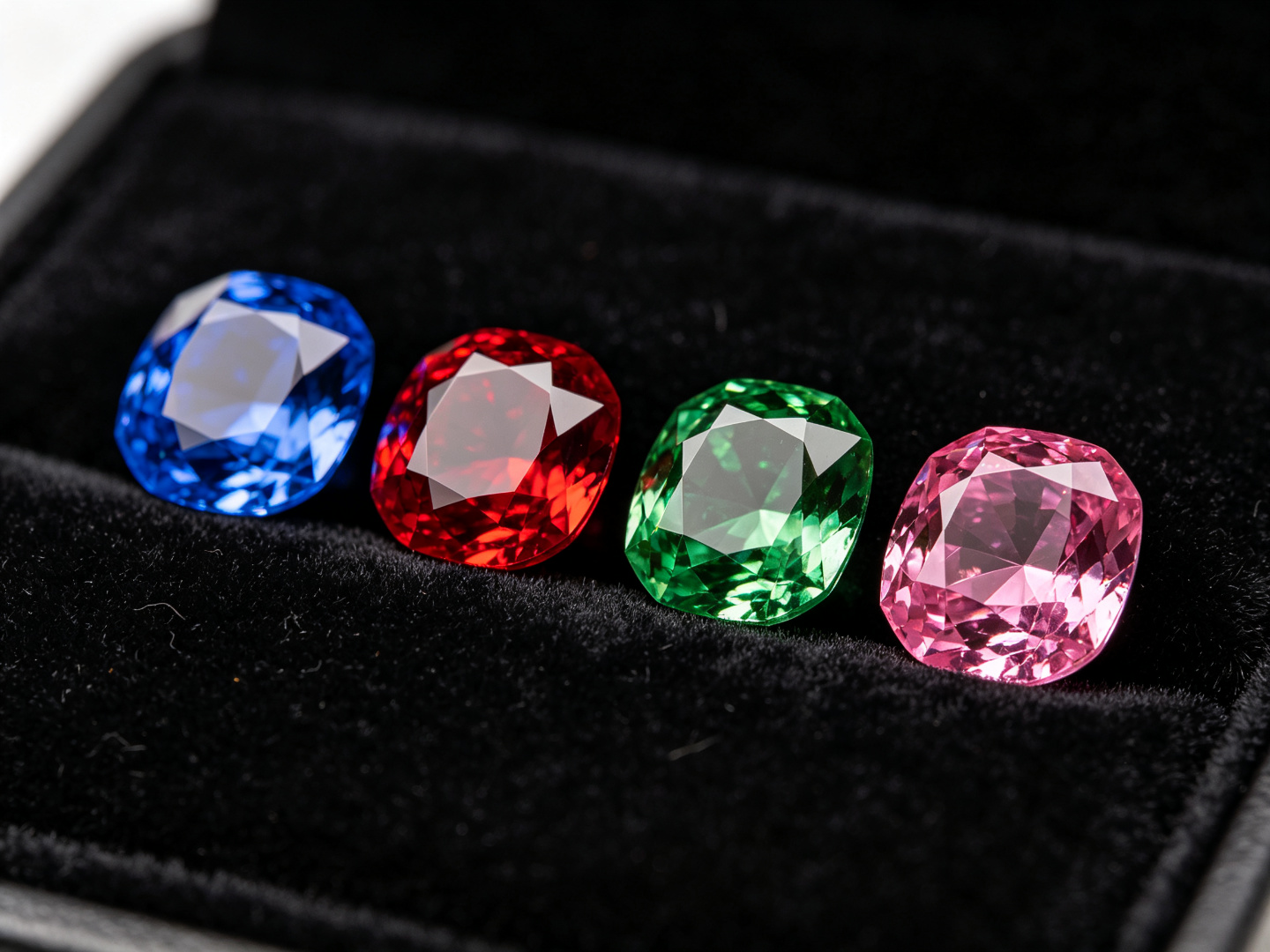
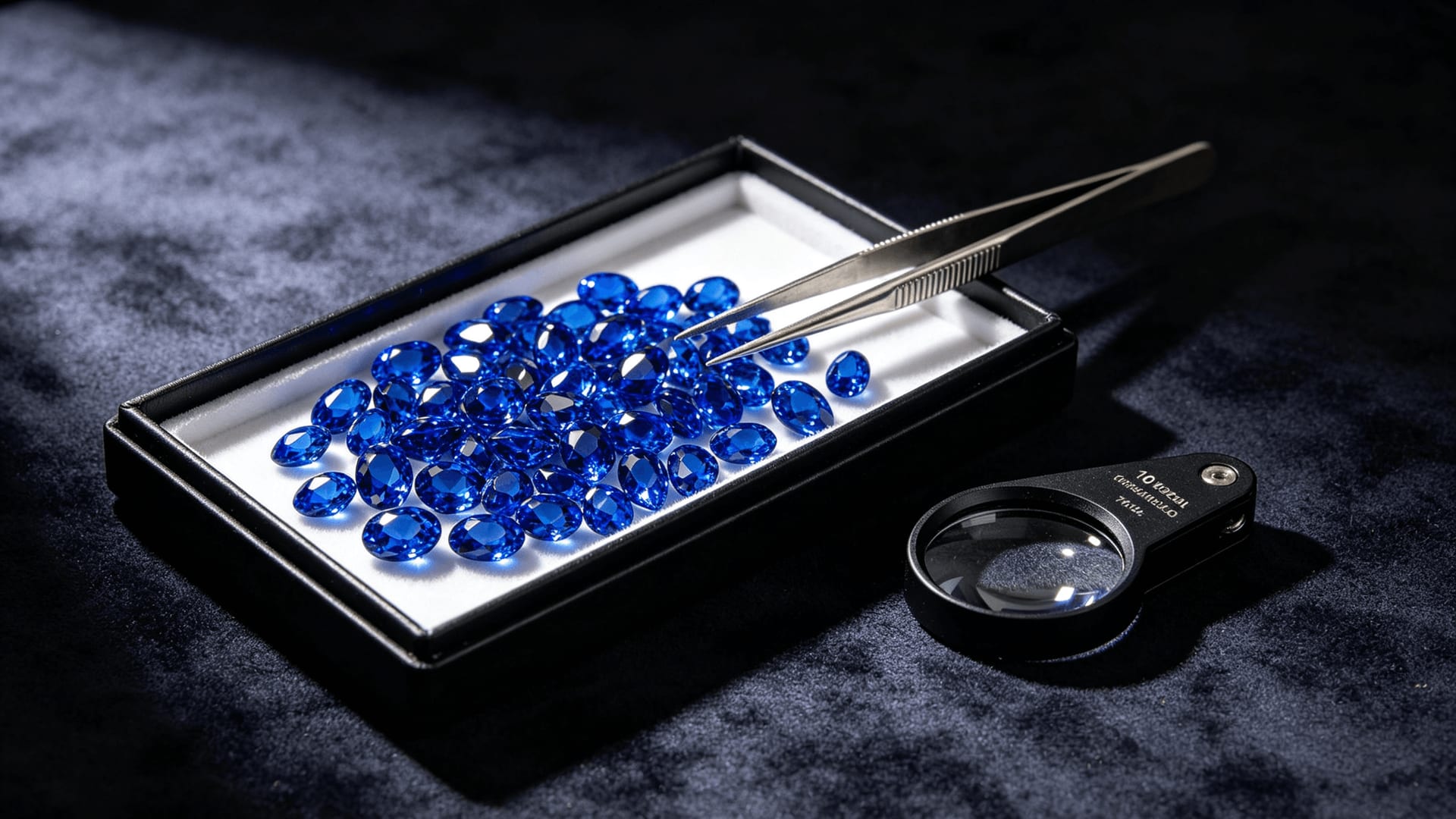
A fresh parcel of blue sapphires - knowing the growth method changes everything.
What Buyers Usually Run Into: The Main Lab-Grown Sapphire Methods
Flame-Fusion (Verneuil)
The oldest and cheapest method. Lots of stones, fast turnaround. You'll see curved growth lines and tiny gas bubbles under magnification. Ideal for bright, consistent blues at low cost.
Czochralski / Pulling
The crystal is pulled from melt. Growth lines are straighter. Cleaner than flame-fusion. Prices sit in the middle because production is slower and quality is more consistent.
Flux-Grown
Grows slowly in a solvent (flux). Usually clean, though you may spot flux-related inclusions or reflective films under magnification. These stones can mimic high-quality natural sapphires and therefore command higher prices.
Hydrothermal
Less common for corundum but used. Grows in high-pressure, high-temperature solutions. Expect very clean material with distinctive growth structures if you look closely. These often sell at a premium compared with flame-fusion.
At a Glance: Method Comparison
MethodCostSpeedTypical FeaturesBest ForFlame-Fusion (Verneuil)LowFastCurved growth lines, tiny gas bubblesVolume, fashion lines, cost-driven piecesCzochralski / PullingMidMediumStraighter growth lines, cleaner materialHigher-end costume, entry-level fine jewelryFlux-GrownHighSlowFlux inclusions, reflective films, very cleanPremium settings, natural-like appearanceHydrothermalHighSlowVery clean, distinctive growth structuresPremium material, rare colors
Illustration: Representative crystal forms - flame-fusion boule, pulled crystal, flux-grown crystal, hydrothermal crystal (left to right). Conceptual rendering, not actual photomicrographs.
Quick QC Checks You Can Do in the Shop or at Your Bench
10x loupe first. Look for curved growth lines (flame-fusion) or rounded gas bubbles (flame-fusion). Flux-grown stones may show reflective platelets or irregular inclusions.
Compare under the same light. Use a daylight-balanced lamp or light box. Put a master sample next to new stones for a color match. If color shifts wildly between bulbs, ask why.
Ask for polarized light photos if you don't have a polariscope. Pull-grown and some synthetics show characteristic strain patterns under polarized light.
Request representative lab reports. Reputable labs can identify lab-grown origin and sometimes the growth method. Labs to consider: GIA, GRS, IGI, or other respected regional labs.
Check for dye or diffusion. Simple test: rinse an edge of a less-visible stone with warm water and a drop of mild detergent. Extreme color bleed is a red flag. For full diffusion testing, rely on a lab report.
A few minutes at the microscope can separate a good buy from an expensive mistake.
How the Method Affects Market Value and Availability
Speed and yield matter. Flame-fusion is fast and yields many stones, so prices are lower and lead-times are short. Slow-growth methods (flux, hydrothermal) cost more to produce - expect higher wholesale prices and fewer pieces per lot.
Color and size drive price the most. A vivid cornflower blue, well saturated and clean, will sell much better than pale blue, no matter the growth method. Matching is harder with larger sizes and rare colors. If you need matched pairs or tight color consistency, expect higher MOQs and a premium.
Practical Price Guidance - What to Expect as a Buyer
Exact numbers change fast, but here's how to think about value:
Flame-fusion: lowest price band. Good for volume, fashion lines, plated jewelry, and pieces where cost is the main driver.
Pull-grown / Czochralski: mid-price band. Better clarity and consistency. Good for higher-end costume and entry-level fine jewelry.
Flux / Hydrothermal: premium for lab-grown. Cleaner, with more natural-like appearance. Better for higher-end settings and pieces with fewer stones where each one must look top quality.
When you compare quotes, ask suppliers to break down price by carat, clarity, and color zoning. If one offers a big discount, check the cutting quality and disclosure first.
Buying Tips That Save Time and Headaches
Ask for a 5-10 piece color-match sample before you commit to a large lot. Small samples reveal batch variation fast.
Set clear MOQs up front. For many suppliers, standard loose sizes might be 5-20 pcs per SKU. Custom cuts or rare colors will often require larger MOQs.
Insist on disclosure. If a stone is lab-grown, diffusion-treated, or otherwise enhanced, it should be clearly stated in the invoice and packing list.
Request photos of the rough or boules for premium batches. That helps verify consistency and production method claims.
Plan lead time for premium material. Flux and hydrothermal runs take longer. If you need a tight delivery, confirm production slots and shipment dates in writing.
Sorting and matching under consistent light - the difference between a smooth production run and returns.
Shipping, Customs, and Paperwork - Quick Checklist
Label items accurately as "lab-grown corundum (sapphire)" on commercial invoices. Mislabeling creates customs delays and fines.
Insure every shipment. Even low-cost stones add up.
Ask the supplier for HS codes and typical duties to estimate landed cost before ordering.
Get packing photos before shipment. That helps in case of transit damage disputes.
A Short Buying Scenario
Say you need 200 matched 6x4 mm blue sapphires for a new bracelet. Don't buy sight-unseen from a single photo. Ask the supplier for a 10-piece match set. Hold those under your shop lamp. If they pass, request a lab report for a few stones and confirm lead time. For a premium look, expect to wait longer and pay more for flux or hydrothermal material. If speed and price matter, get flame-fusion with strict color controls.
Why Working With a Steady Supplier Matters
Consistency is everything. The same batch, same color, same cut - that's what keeps your production smooth and your customers happy. Suppliers who clear their stock fast but can't repeat a color are a headache.
A well-cut, vivid cornflower blue - the kind of stone that keeps customers coming back.
We Can Help - and How to Reach Us
We're a professional lab-grown gemstone supplier. We keep stable production slots with vetted growers, and we manage stock so you get consistent color and reliable lead times. We provide QC photos, representative lab reports on request, and clear labeling for customs and retail. If you need matched sets, we can pre-select and reserve lots for you.
Want to see current stock or request samples? Email our sales team at sales@raystonegem.com. Reply with the size, color target, and estimated quantity. We'll send photos, sample conditions, MOQ options, and a shipping estimate within one business day.
If you prefer, tell us your project: size ranges, color swatches, budget per carat. We'll recommend the fastest route to consistent stones and a firm lead time.
No fluff, no guesswork - just the checks that keep your inventory moving. Email sales@raystonegem.com and we'll have a sample box ready for you.
This guide is intended for trade professionals. For definitive origin or treatment claims on high-value material, rely on a full laboratory report rather than visual inspection alone. Crystal form illustrations are conceptual and not actual photomicrographs.