
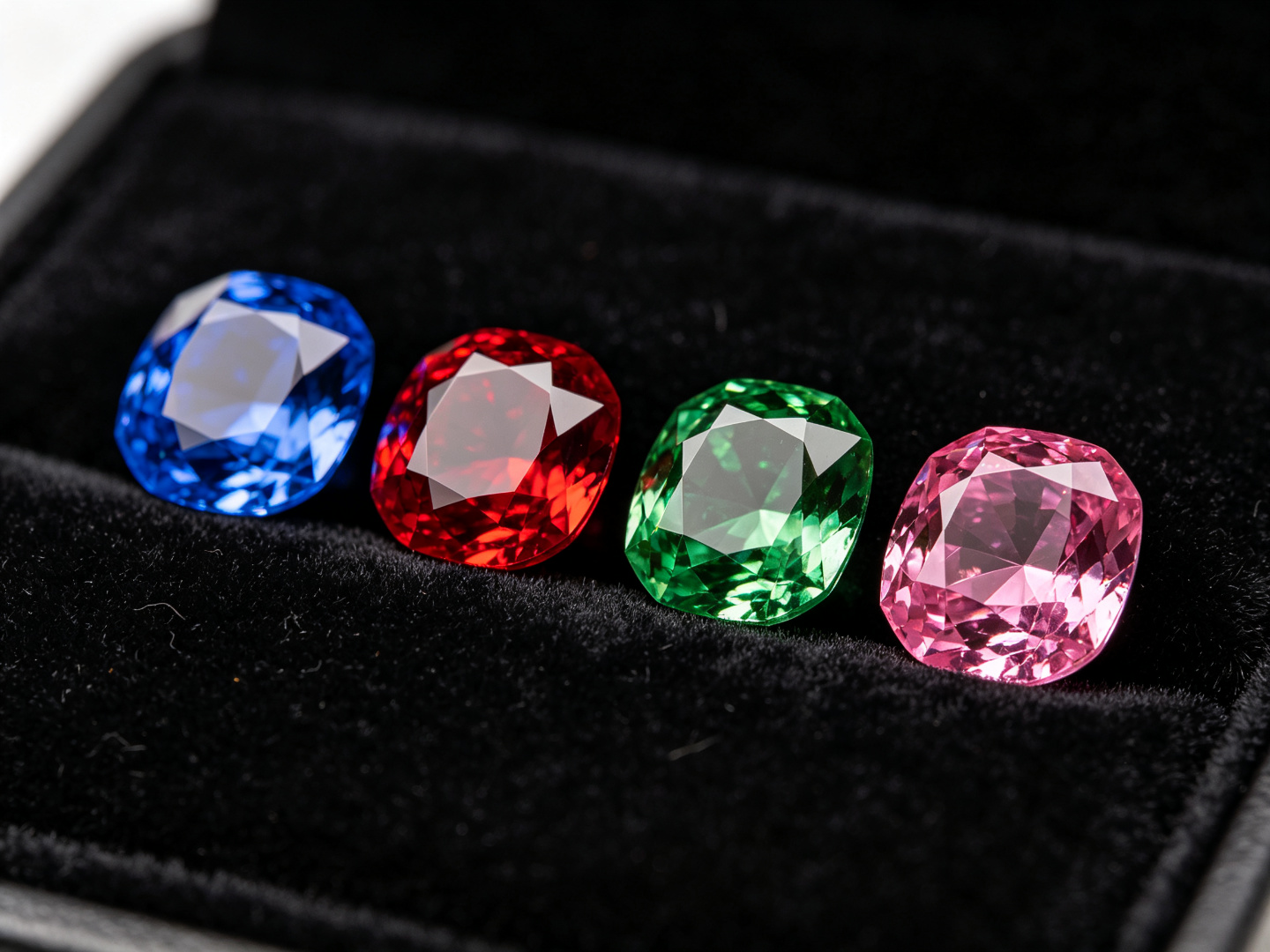
For gemstone traders and importers sourcing lab-grown ruby, production method matters. Flame-fusion (Verneuil) and the pulling or Czochralski method are two common growth routes with distinct production profiles, optical characteristics and price positions. This note explains the technical differences, the visual and gemological cues buyers can use, and practical sourcing considerations for each type.
How the two methods work
Flame-fusion (Verneuil)
The flame-fusion process introduced in the early 20th century melts finely powdered alumina doped with chromium in an oxy-hydrogen flame. Droplets fall onto a seed and solidify to form a boule. The process is continuous and fast, producing material at high throughput and low cost. It's the classical route for many synthetic corundums sold as "synthetic ruby."
Pulling (Czochralski)
The pulling method melts the charge in a crucible and grows a crystal by dipping a seed and slowly pulling and rotating it from the melt. Growth rates are slower and equipment more complex, but the technique gives better control over crystal chemistry and structural integrity. The result is a larger, higher optical-quality boule with fewer gas inclusions and less internal strain than Verneuil material.
Key visual and gemological differences
- Growth features: Verneuil crystals show obvious curved growth lines and banding (curved striae) under magnification. Pulling-grown crystals display straighter sector lines and more regular growth zoning.
- Inclusions: Flame-fusion often traps small gas bubbles and feather-like features; pulling-method boules typically have fewer bubbles and cleaner, often needle-like or solid inclusions from the crucible or seed.
- Strain and extinction: Verneuil material can show stronger strain patterns and anomalous extinction in polarized light; pulling-grown corundum commonly shows lower strain.
- Color distribution: Flame-fusion can produce very uniform, saturated color but sometimes with banded zoning. Pulling allows finer control of dopant level, often producing more natural-looking zoning and a wider range of trade-preferred tones.
- Size and yield: Verneuil is good for producing many small calibrated gems quickly; pulling is preferred when larger, high-clarity boules are required for larger faceted stones.
Implications for quality, pricing and market fit
Flame-fusion rubies are typically the most cost-effective lab-grown option-ideal for calibrated inventories, low- to mid-price-point fashion jewelry and volume projects. Pulling-method rubies trade at a premium for comparable sizes because of superior clarity and fewer growth-related features; they suit retail-grade faceted stones, branded collections and applications where clean appearance commands higher margins.
How to inspect and verify on the trading floor
- Ask for 10-20x loupe images: Look for curved striae (Verneuil) vs linear sector growth (pulling).
- Request immersion/overhead photos: These reveal banding and color zoning more clearly than flat photos.
- Check for gas bubbles: Abundant round bubbles point to Verneuil growth.
- Demand supplier disclosure: Reputable labs and producers will state the growth method and supply high-magnification images and growth orientation.
- Use a gem lab report for high-value lots: Standard gemological testing (inclusion photomicrography, spectroscopy) helps confirm origin when purchase value justifies the cost.
Practical buying tips for wholesalers and importers
- Match product to market: choose Verneuil for high-volume, price-sensitive runs and pulling-grown for higher-end inventory.
- Specify buyer attributes: color tone, clarity grade, size range and whether you accept flame-fusion characteristic features in supplier terms.
- Negotiate sample runs: order a small parcel to vet color consistency and yield before committing to bulk lots.
- Verify chain of custody and disclosure: label origin and growth method clearly in invoices and marketing to avoid disputes at retail.
Summary
Both flame-fusion and pulling methods produce chemically identical corundum doped to ruby color, but they serve different commercial needs. Flame-fusion offers high throughput and lower unit cost with telltale curved growth lines and more gas bubbles. Pulling (Czochralski) yields cleaner, more uniform material with tighter quality control and a higher price point. For trade buyers the decision comes down to intended use, target price tier and tolerance for characteristic growth features-inspect magnified images, require supplier disclosure and choose the method that aligns with your product positioning.