
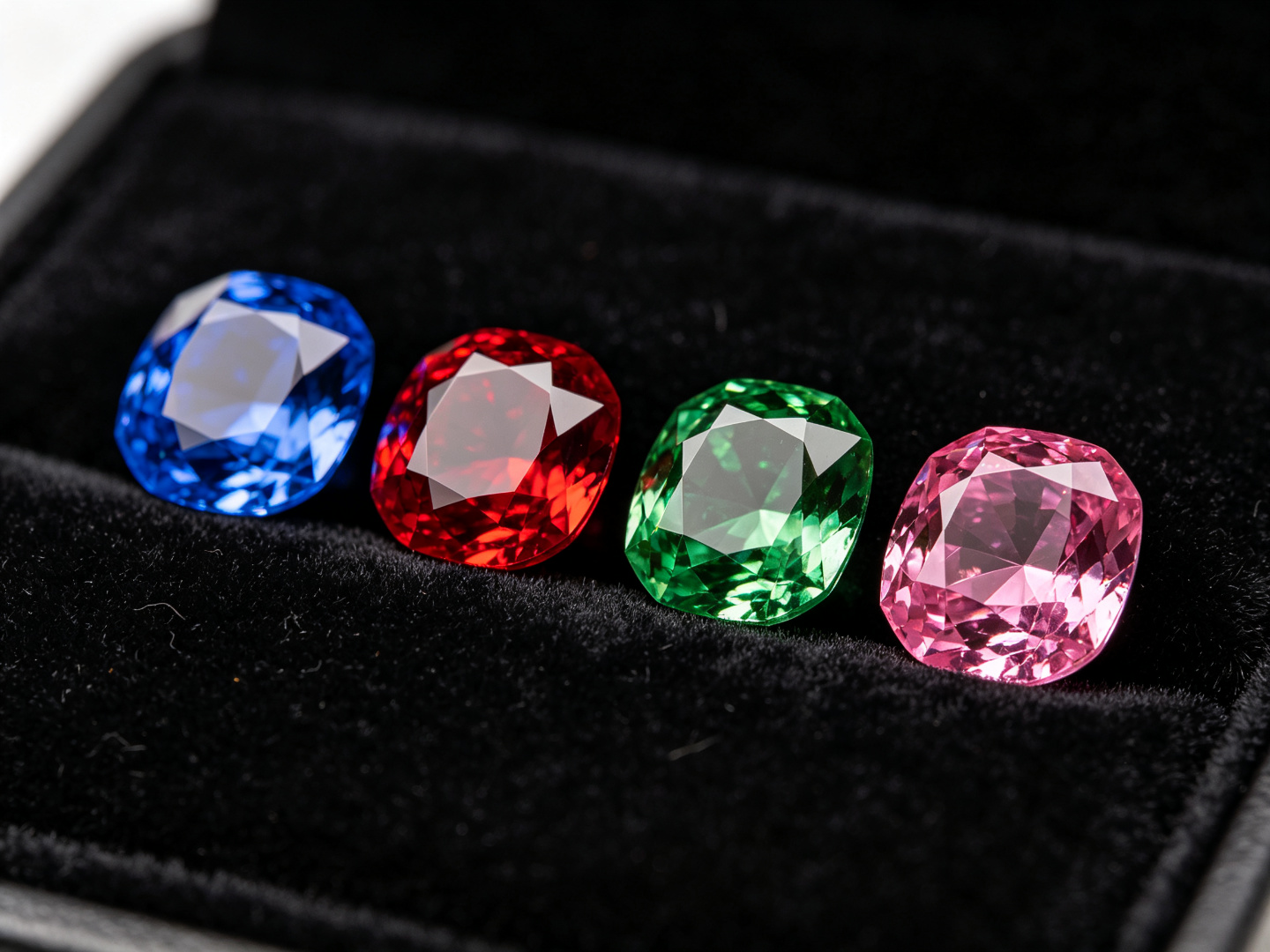
I have long loved gemstones and discussed the trade with many industry people , I've had quite a few conversations with people working with both natural and lab-grown stones.
One question comes up again and again:
When you're buying gemstones for a new collection, should you go with lab-grown or natural?
At first, I thought this would be a pretty straightforward question.
But after talking to people who actually buy, sell, and work with both types of gemstones, I realized there isn't really one answer.
It depends on the product, the customer you're selling to, how much inventory you want to hold, and how important things like color consistency and replenishment are.
So I put together some of the things that came up most often in those conversations.
If you're trying to decide between lab-grown and natural gemstones, I hope this gives you a more practical way to think about it.
It Really Starts With Your Customer
One thing I heard several times was that the decision shouldn't start with the supplier.
It should start with the customer.
If your customers mainly care about the look of the stone, the design, the size, and the final price, lab-grown can be an attractive option.
What do they care about most : price,look,rarity,or long-term wear ?
If your customers specifically care about natural origin, rarity, or the individual character of a gemstone, then natural stones are obviously a different proposition.
That sounds simple, but I think it's easy to get caught up in the stone itself when you're buying.
A gemstone can look beautiful and have a great price, but if it doesn't fit the product or the customer, it may not be the right purchase.
Why Some People Prefer Lab-Grown for Production ?
One of the biggest advantages people mentioned when we talked about lab-grown stones was consistency.
If you're making a collection that needs a lot of stones in the same color and size, having a more repeatable supply can make things much easier.
This is especially useful for things like matching earrings, pairs, calibrated stones, or larger production runs.
Price is another obvious factor.
For many gemstones, lab-grown material can cost less than comparable natural material. That gives a brand more flexibility with the final retail price or with its margins.
Another thing that came up was replenishment.
If a design sells well, you want to know that you can come back and buy more stones that look reasonably close to the original batch.
That can be easier with lab-grown stones, especially for popular colors and sizes.
Fancy colors are another interesting example.
If you need vivid pinks, blues, or ruby-like colors in quantity, lab-grown can sometimes make it much easier to source the look you want without the cost becoming extremely high.
But there's an important point that came up in several conversations:
Lab-grown doesn't automatically mean identical.
Different suppliers, batches, cutting styles, and proportions can still create visible differences.
So even with lab-grown, I wouldn't skip the sample stage.
Natural Stones Are a Different Kind of Product
As I talked with people who trade natural gemstones, I noticed one key point.
Buyers don't always pick natural stones only based on specifications.
The fact that they are natural can itself be part of the product.
For some customers, things like natural origin, rarity, inclusions, color zoning, and the individuality of each stone are important.
That changes the way you look at the purchase.
Instead of asking only, "Does this stone match the specification?", you may also be asking, "Does this particular stone have the character that makes it right for this product?"
But there is a trade-off.
If you need a large number of stones that all look very similar, natural material can be much harder to match.
That's why, when matching is important, several people I spoke with recommended securing the stones from the same batch whenever possible.
Especially for matched pairs or calibrated stones, I wouldn't assume that you can simply come back later and find exactly the same material.
The Color-Matching Problem Is Bigger Than It Looks
This was probably one of the most common topics in my conversations.
Photos can be misleading.
A supplier can send you a photo of a batch where everything looks beautifully consistent.
Then you receive the actual stones and notice that some are slightly warmer, cooler, darker, lighter, more purple, or more brown than you expected.
This doesn't necessarily mean the supplier sent you the wrong stones.
Gemstone photography is heavily affected by lighting, camera settings, white balance, and the display you're looking at.
And with colored stones, small differences can become very obvious when the stones are placed next to each other.
So one practical rule I've picked up is:
Use photos to shortlist stones. Use physical samples to approve important colors.
If color matching is critical to your product, I'd also recommend keeping a physical master stone or reference set.
It's much easier to say, "I want this"
There is another important conversation point I want to share.
Many buyers feel defensive if you directly ask for their budget. They may worry you will push higher-priced stones.
Instead of jumping straight to budget questions, I start by learning about your target colours, whether the stones are for fine jewellery wear or collection use, and your design goals.
With that information, I lay out the pros and cons of natural and lab-grown stones, along with cost differences.
Many buyers do not want to spend energy sorting through all options.
My job is to organize the facts for you, while the final choice stays in your hands.